Flood Zones in Norwalk: Permits and Insurance Basics
October 16, 2025
October 16, 2025
Is a Norwalk address you love in a flood zone? Flood status can change what permits you pull, how your lender underwrites the loan, and what you pay for insurance. The good news: with a simple checklist, you can get clear answers before you commit. In this guide, you will learn how to check a property’s flood zone, what Norwalk permits typically require, and how insurance and lenders treat flood risk. Let’s dive in.
FEMA’s Flood Insurance Rate Maps are the official source for flood zones in Norwalk. You can search any address and download a property FIRMette on the FEMA Map Service Center. Start with an address lookup on the FEMA Map Service Center and save the current panel for your records.
FEMA posted updated preliminary flood maps for Fairfield County in 2024. During the appeal and comment window, the maps are not yet effective, then the city adopts the final maps by the effective date. Check the FEMA update for Fairfield County and confirm the currently effective map before you decide.
Even homes outside Special Flood Hazard Areas can flood. FEMA notes that a meaningful share of claims come from outside high‑risk zones, so look at drainage, elevation, and any property history, not just the zone label.
Most projects in Norwalk begin with a Zoning Permit and a Building Permit. If your property sits in the Flood Hazard Zone Overlay, the city requires added documentation and a flood overlay application. The Planning and Zoning office may also route plans for Conservation, Wetlands, or Stormwater review when needed. Start with the city’s permit instructions.
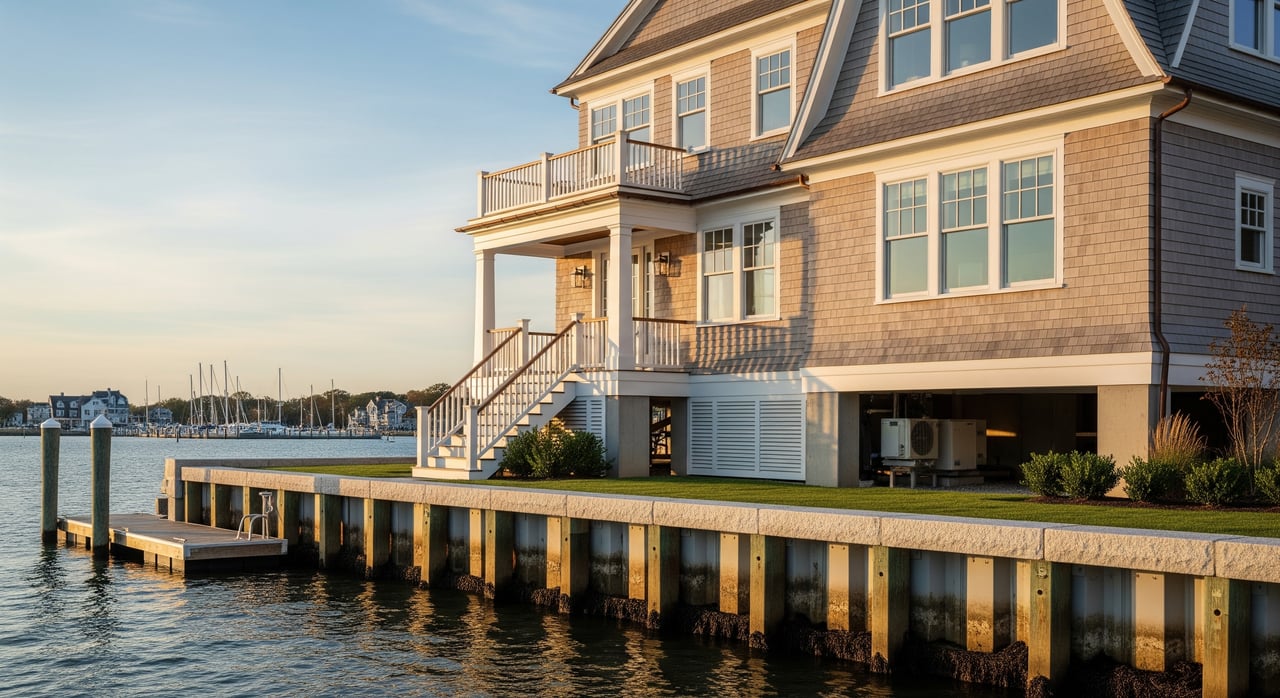
Norwalk’s rules reference FEMA and local Article 6 standards. Expect items like flood vents or breakaway walls for enclosed areas, flood‑resistant materials below the flood level, and finished living space at least two feet above the Base Flood Elevation where a BFE exists. A FEMA Elevation Certificate, prepared by a Connecticut‑licensed land surveyor, is typically needed to document compliance. Review the city’s flood guidance.
Norwalk follows FEMA’s substantial improvement rules and tracks your project costs over a five‑year window. If the cumulative work crosses the local threshold, the structure must be brought into full compliance. Before you finalize scope and budget, review Article 6 and the city’s flood guide so you do not trigger requirements you did not plan for. See Norwalk’s overview.
Most Norwalk buyers use National Flood Insurance Program policies sold by private agents. There is typically a 30‑day waiting period for new NFIP policies, so build that into your timeline. Review NFIP policy basics and waiting periods.
FEMA’s Risk Rating 2.0 prices policies using property‑specific factors like elevation, distance to water, and rebuild cost. Premiums can go up or down compared with the old zone‑based system, so get a quote for the exact home, not just the neighborhood. See FEMA’s Risk Rating 2.0 overview.
If a home that secures a federally regulated or insured mortgage is in a Special Flood Hazard Area, federal rules require flood insurance. Even if a later map change removes the property from the SFHA, your lender may still require coverage under loan terms. Confirm the requirement with your lender early. Read the federal guidance for borrowers.
Some properties are high on their lots or built above the Base Flood Elevation. If survey evidence supports it, a Letter of Map Amendment or Revision can remove a structure or parcel from the SFHA and end the federal mandate. The process requires certified elevation data and takes time, so plan ahead. Learn about LOMA and LOMR.
Common mitigation steps include elevating structures above BFE, adding flood vents, using flood‑resistant materials below flood levels, and improving site drainage. Dry floodproofing generally applies to non‑residential buildings under NFIP criteria, so ask your engineer about the right approach.
Norwalk continues to invest in drainage projects to reduce neighborhood flooding. Recent examples include work in the Dreamy Hollow area and a $5.1 million project at Heather and Lockwood Lanes that began in 2024 to 2025. These efforts can reduce exposure over time and are part of the bigger picture for a property’s risk. Read about the Heather and Lockwood project.
Flood status does not have to derail your plans. With the right map checks, permit prep, and insurance quotes, you can move forward with confidence. If you would like a clear plan for your Norwalk purchase or sale, connect with Erin Melson for local guidance and a no‑surprises process.
Stay up to date on the latest real estate trends.

Etiam non quam lacus suspendisse faucibus interdum. Orci ac auctor augue mauris augue neque. Bibendum at varius vel pharetra. Viverra orci sagittis eu volutpat.